Keeping the Canal in Operation
One can only imagine how difficult it was to
design and build the canal system with enough water at its various elevations to ensure
that canal boats could efficiently operate. At times, it was as difficult to keep the 300
miles of canal repaired. Breaks in the canal banks, due to the forces of
‘Mother Nature’ or the action of the boats and the animals, were common. At
times, long stretches of the canal were dry. The September 25, 1895, edition of "The
Sidney Daily New’s reported, "The Miami and Erie Canal, from New Bremen
to Defiance, is perfectly dry. The distance is 75 miles, and the absence of water is an
unprecedented condition for any canal in Ohio."
The Canal Commissioners hired
men to walk the canal and ride in state-owned maintenance boats, repairing breaks in the
canal. Peter Kiefer, a native of Ft. Loramie, worked on one of the boats, cutting grass in
the canal bed and repairing the canal bank. He explained the state leased the canal to
private operators for a few years, but most operators never repaired their sections of the
canal. When state officials realized the private leasing plan was not working, and took
the canal over again, it was too late to repair all of the canal.
Repair work on the canal was usually a steady source of business for local contractors.
"The Sidney Daily News" of March 25, 1897, carried an announcement
that Berry and Sons of Versailles had been awarded the contract to replace 4,500 cubic
yards of canal embankment near Newport that had "washed away during the recent
high waters."
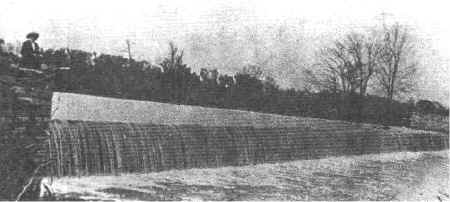
The dam north of Port Jefferson (shown below), an important structure because it
diverted the waters from the Great Miami River into the Sidney Feeder, was rebuilt in
1884, and again in the 1930s. |