|
About The
Archaic Period
As early as 8,000 BC, the aborigine civilization
progressed into what is now known as the Archaic Period (8,000 BC - 1,000 AD), which,
because of alterations in the region’s climate and the extinction of the large
mammals, brought cultural and lifestyle changes for the natives. The Indians that lived
during this period are called the Archaic Indians. They survived in this pre-agricultural
era by hunting antelope and smaller game such as rabbit, wild turkey and quail. Fish were
also a part of their diet along with wild vegetables and grains. They were armed with
throwing sticks and spears when hunting game, and used flint points (arrow heads, spear
heads) that are easily recognized today.
Around 5,000 BC, in the Great Lakes region, the Archaic Indians
began to produce spear points, axes and knives from copper. Because they buried their dead
in huge gravel deposits left by the glaciers, many of their skeletal remains have been
uncovered by archeologists.
When the European pioneers moved into Ohio they began to replace
early mud roads with gravel mined from some of these deposits, and, in doing so, many
skeletons were uncovered. Human bones have been found throughout the state, including
Shelby County, Ohio. Analyses of these remains has revealed that the males averaged 5
feet, 4 inches in height, and the women 5 feet. Their spoken language was never documented
and will probably remain unknown.
'Indian' segment written in December, 1997 by David Lodge
[ Back to Indians Index ]
|
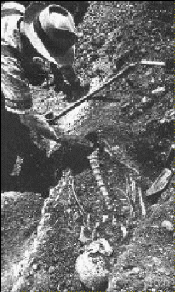
In
this 1960s photo, Piqua Historian Leonard Hill looks at a male Indian skeleton unearthed
in a gravel pit, east of Boone's hill.
|