|
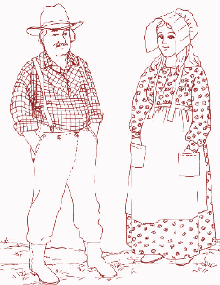
Pioneer Clothing
Pioneers had to make all the thread they required for their
clothing, draperies, sheets, towels and any other cloth needs. In Ohio, the materials most
used were wool and linen. The wool from sheep was spun to make thread. To make linen
thread, a plant called flax was grown, processed and spun. After the threads were spun on
a spinning wheel, they were dyed to the color needed and, if possible, taken to a weaver
to make yardage.
The making of material took a lot of time and work, which is why people had only
a few sets of clothing. Girls would have learned how to spin, starting at the age of six.
Dyes used included madder, copperas and indigo. In the mid 1800s, fine linen thread was
used to make summer clothes, especially men’s shirts. Heavy linen thread was used to
make storage bags or towels.
According to Sutton, for
the early residents of Shelby County, Ohio, "...clothing consisted of the furs and
skins of animals they had killed, or a little later along, of flax raised, spun and woven
by their own hands. Any article that they had to depend upon purchasing at a store we
dispensed with, for there were no stores within reach of them. Their nearest point of
trade for several years was Cincinnati, at that time a small village, and it would take
them a week or 10 days to make the trip through the woods without a road."
Ironing was done by
placing a covered board between two chair backs and heating heavy irons on the stove. They
kept at least two (and sometimes three) irons on the stove heating. |
|
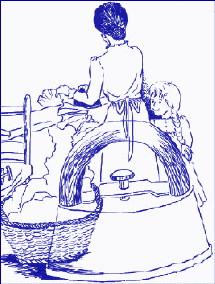
Water was hauled from nearby streams to wash all clothes by hand with
homemade soap. Filling a large pot with water, the women would heat it over a fire. When
the water was boiling, lye soap would be added along with the dirty clothing. This was
then stirred, by hand, like the motion of a washing machine. The clothes were wrung out
and hung to dry.
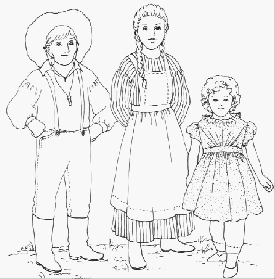 Boys
wore shirts and pants made of cotton or buckskin, which is leather made from the skin of a
deer. It is soft and strong, and yellow or gray in color. Girls wore skirts or dresses,
usually made of brightly colored cotton called calico or gingham. It had stripes, checks
or flowers in different colors. Boys
wore shirts and pants made of cotton or buckskin, which is leather made from the skin of a
deer. It is soft and strong, and yellow or gray in color. Girls wore skirts or dresses,
usually made of brightly colored cotton called calico or gingham. It had stripes, checks
or flowers in different colors.
It was very important for a boy to have a
hat with a wide brim and a girl to wear a bonnet to protect their eyes. There were no
sunglasses then and the pioneers spent many hours in the hot and bright sun. Boys wore
suspenders and girls wore aprons and pantalets. None of the clothing had zippers since
they had not yet been invented.
By 1839, there were 11 dry
goods merchants in Sidney whereby residents could purchase or barter for material and/or
sewing items.
'Pioneer' segment written in
October, 1997 by Sherrie Casad-Lodge
[ Back to Pioneer Index ] |