| Sir
Philip Sidney
Although it was a noble
gesture on the part of the donor to give 70 acres for the establishment of a new town, it
was also a shrewd business plan since land cultivating corn fetched a price of $8 an acre
in 1820 (a 70 acre sale would realize $560), while Charles
Starrett’s share from the sale of lots brought him more than $3,000.
By 1820, the population of Shelby County was comprised of many American citizens from
Kentucky, Virginia and states to the east (many of these individuals were of British
descent), and immigrants from England, Ireland, Scotland, Wales and a few Germans and French who were either here prior to the War of 1812 or arrived after its conclusion.
The naming of the county after General Isaac Shelby has its basis in the large
complement of Kentuckians living in the area at that time. Over the years, Ohio would
continue to be a favorite destination for Kentuckians seeking employment and a better life
for their families.
The new town was named Sidney, after Sir
Philip Sidney, an English soldier, statesmen, patriot, writer and member of
parliament. The first plat of Sidney was filed on February 24, 1820, and with the county
recorder on April 18, 1820. Even the naming of Sidney, after Sir Philip who died a war
hero in 1586, (shown below), arises from the influence of the many British
immigrants who lived in this area.
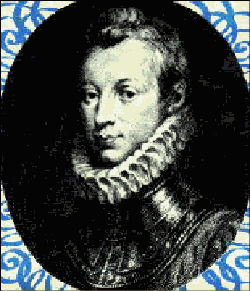
Sir Philip Sidney
'Immigration'
segment written in November, 1997 by David
Lodge
[ Back to Immigration Index ]
|