|
Arriving
in U.S. Was Only First Step
Many More Hours of Travel Needed to Get to Local Cities
Many early 19th
century immigrants to Ohio entered the U.S. through the ports of Philadelphia, Baltimore,
and other eastern cities, where, after a short stay, they hired freight wagons to
transport their possessions (while they walked) to Wheeling, West Virginia, or Pittsburgh,
Pennsylvania. In both cities, they boarded steamships for the trip down the Ohio River to
Cincinnati, th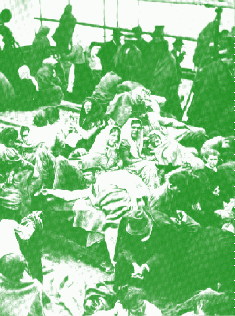 en began the nearly 100 mile overland trip to Shelby County. en began the nearly 100 mile overland trip to Shelby County.
Even this
part of the journey could be treacherous, as the ‘need for speed’ frequently led
to mishandling and firing of the boilers which caused explosions. According to the
"Early History of Ft. Loramie", in 1848, 511 people died from steamship
accidents. "The price of the tripwas $1 for deck passengers, who were crowded
among livestock and cargo  on the lower deck, cooking their porridge on boiler flues and
drinking river water. They slept on bales and boxes. They could ride for nothing if they
helped load the ships with wood for the boilers at designated points." on the lower deck, cooking their porridge on boiler flues and
drinking river water. They slept on bales and boxes. They could ride for nothing if they
helped load the ships with wood for the boilers at designated points."
Depending upon when and where an immigrant arrived in the U.S., they traveled by foot,
horse, wagon, keelboat, flat boat, canal boat,
steamer or train to their destination. For a comparative of traveling time required, a
little less than an hour’s worth of driving time today would equal a minimum of a day
or two journey for an early settler.
'Immigration'
segment written in November, 1997 by David
Lodge
[ Back to Immigration Index ]
|