|
Liberty For All
In the months prior
to 1874, the people of France began to raise money to pay for the building of a statue
that would be their gift to the United States. In 1874, the French sculptor, Frederic
Auguste Bartholdi, designed and began to build a statue that would tower 151 feet, 1 inch
into the American sky. At the same time, the American public was raising money to build a
base in New York harbor that would raise the statue up to a height of over 300 feet from
the bottom of the base to the tip of the torch.
She was unveiled to the world on
October 18, 1886, and has become a world symbol of the United States and its democratic
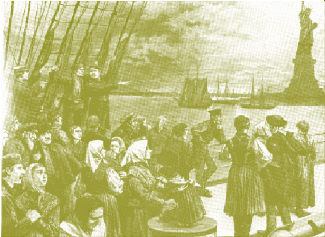
traditions. To immigrants aboard ships and planes, eyes scanning the horizon as they moved
west, desperately wanting to glimpse the gracious lady with freedom’s torch held high
in her right arm and a book inscribed, July 4, 1776, in her left arm, seeing the Statue of
Liberty was the beginning of their new life in America.
The poem by the American writer, Emma Lazarus, inscribed on a tablet at the main
entrance to the pedestal is well-known to many Americans. Her poem, and America’s
invitation, reads:
The exuberance of safely reaching the New World, with their
hopes, dreams and aspirations intact for a better life for themselves and their children,
elicited emotional responses and the shedding of joyful tears that have soaked the decks
of mankind’s ships from the smallest and humblest of sailing vessels to the finest,
graceful, ocean-going liners. The immigrant, like war’s unknown soldier, is for the
most part faceless, but the results of his and her determination and courage transcends
anonymity and leaves us with a legacy of national pride in ourselves, our achievements,
and our nation as it prepares to step boldly into the 21st century.
'Immigration'
segment written in November, 1997 by David
Lodge
[ Back to Immigration Index ]
|