|
Ohio
Land Grants/Greenville Treaty
Clark’s expedition would prove important to
Ohio’s growth, because in addition to punishing Indians for their raids on
settlements, it also attracted the interest of the people in the U.S. They began to
believe that the ‘west’ could be made a "fitting place to live".
After Great Britain formally relinquished its rights, settlers from other states began
to move in. In 1785, Congress passed the Land Ordinance Act providing conditions for sale
of land in the new territory. The first permanent settlements in Ohio were established;
Marietta, 1788; Cincinnati, 1789; and Cleveland, 1796. The Indians were not happy with this influx of new
Ohio immigrants/settlers and frontier wars broke out that continued until the signing of
the Greene Ville Treaty with the Indians on
August 3, 1795.
The most important aspect of this treaty was that the northwest part of the Ohio
territory would belong to the Indians and the southern part would belong to the whites. It
ceded 16,930,417 acres and involved eleven northwestern Indian tribes. The Greenville
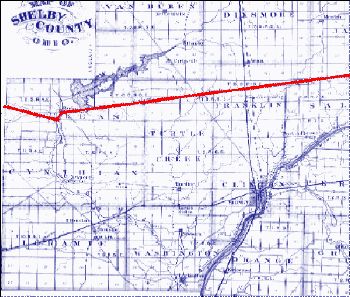
Treaty Line went through Shelby County, starting a little south of Ft. Loramie. Crossing
from east to west, it entered at what is now Salem township and exited at McLean township.
This treaty signaled the beginning of real settlement activity for Ohio and Shelby County.
Settlement north of the line (shown in red on the ca. 1880 Shelby County map above) would be determined by a later agreement with the Indians; immigrants did not settle that
area until the 1830s.
'Immigration'
segment written in November, 1997 by David
Lodge
[ Back to Immigration Index ]
|