|
Water Sources
The route for the Miami Canal was chosen because of the
proximity of natural water sources, such as the Great Miami River. The Sidney Feeder
brought water from the Great Miami River at Port Jefferson,
but other man-made water sources were needed. A total of five were proposed for the area
known as the 'Loramie Summit,' but only three were built. The canal project thus included
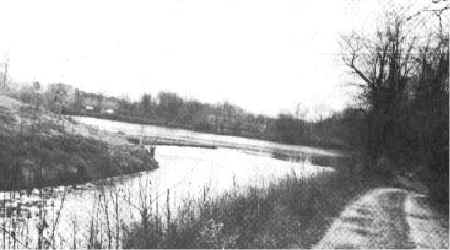
the construction of two reservoirs to supply canal water in our area, Lake Loramie and
Lewistown. Digging out these mosquito-infested swamps to create lakes capable of holding water was particularly tough work. The cost for the
Loramie reservoir was $22,000 and the Lewistown reservoir was $600,000. The Lewistown
project involved flooding a large area of swamp land and incorporating what was then a
small Indian Lake. Most of the work took place between 1851 and 1860.
The third reservoir, in Mercer County, is known as Grand Lake St. Marys. It was the
largest man-made lake in the world until the construction of Hoover Dam in Arizona in the
1930s.
'Canal' segment written in
December, 1998 by Rich Wallace
[ Back to Canal Index ]
|