|
Lockington
David Mellinger filed a plat for the town of
Locksport in November 1837, just as canal construction was moving north from Piqua. It is
certain that Mellinger knew of the precise location of the canal, and he laid out the town
to take advantage of the location at the series of locks. Piqua historian Jim Oda aptly
described Mellinger's intent. "Its whole function was to be a boomtown for the
Miami-Erie canal." Locksport, (later renamed Lockington because two other towns
on canals in Ohio bore that name), fulfilled every wish of its founder.
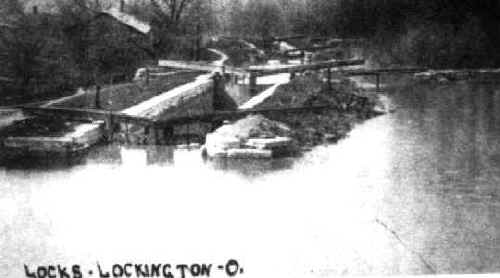
The little
village was situated at the site of the 6 locks, which enabled canal boats to be raised or
lowered a total of 67 feet at the edge of the 'Loramie Summit.' At the height of the
activity on the canal, scores of boats a day moved through the system of locks. This slow
process (it took as long as five or six hours to traverse the locks) caused a backup of
boat traffic, which in turn allowed travelers to go ashore for a period of time. Mrs.
Joseph Avy, a long-time Lockington resident, recalled in a 1991 interview that boat
captains would race to the first lock in the village, hoping the locktender would let them
pass through first. This was especially helpful when the cargo was perishable goods. A
collection of log houses and huts sprang up, first occupied by laborers working on the
canal, and later by the owners of stores and other businesses. Chief among the enterprises
were at least six saloons and a brothel. Jim Oda notes that the canalers came to town with
"...one criteria, and that was to drink." The traditional tavern had two
floors, one where the men would drink, and the other where they would sleep it off
(usually with three or four men to each bed). One of the taverns, known as Fort Sumpter,
was invaded by women armed with guns one
night, but the bar was back in business the next night.
Locksport attained true 'boomtown' status about 1845 when the entire length of the
canal was first opened. Business activity peaked close to 1860, and curtailed gradually as
canal boat traffic declined. Construction of the railroads,
which helped bring about the decline and eventual demise of the canal, spelled the end of
dreams of Lockington's residents for it to become a large city.
'Canal' segment written in
December, 1998 by Rich Wallace
[ Back to Canal Index ]
|